

Health Resources Hub / Skin Health / Hidradenitis Suppurativa
“HS Does Not Have You”: Inside a Community Conversation on Stigma and Self-Advocacy
In a UCB-hosted roundtable, patient advocates with HS and a dermatologist discuss the stigma, diagnostic delays and emotional toll that come with hidradenitis suppurativa, and what genuine support looks like.
Advertisement
Advertisement
By
Lana Pine| Published on October 13, 2026
Fact checked by:
Afton Woodward9 min read
Hidradenitis suppurativa (HS) affects an estimated 1 in 100 people, according to dermatologist Jennifer Hsiao, M.D., yet it remains one of the most misunderstood chronic skin conditions, one that frequently takes years to diagnose and carries a stigma that reaches far beyond the skin itself. At a recent roundtable hosted by UCB, “Beyond the Surface: A Community Conversation Addressing Stigma in Hidradenitis Suppurativa Through Art, Advocacy and Connection,” three women who live and work at the center of the HS community, patient advocate PreShus Lee, Association of Hidradenitis Suppurativa and Inflammatory Diseases (AHSID) founder Jasmine Espy, and Hsiao, a dermatologist and co-director of the HS specialty clinic at Keck Medicine of USC, spoke candidly about diagnosis delays, self-advocacy and what it actually means to feel seen.
The conversation was moderated by illustrator and graphic designer Sophia Yeshi, who collaborated with UCB on Wear It Out, a campaign created with and for the HS, psoriasis (PsO) and psoriatic arthritis (PsA) communities. Living with these conditions, the campaign says, means navigating a world that hasn’t fully appreciated their weight for far too long, and it’s built to tell people in these communities, “we see you, we support you,” inviting them to wear it out with confidence.
“More than skin-deep”
Asked what she wishes more people understood about living with HS day to day, Lee didn’t start with symptoms. She started with the emotional weight of simply showing up. “HS is more than just skin-deep,” she said. “It’s mental. It’s physical. It’s spiritual sometimes.” She described the quiet exhaustion of appearing composed in public while managing pain and discomfort that others can’t see, comparing it to wearing a mask just to get through the day.
That invisible burden shows up even in something as small as getting dressed. Lee recalled wearing a sweater every day throughout high school, regardless of the weather, to cover what her uniform’s white shirt would otherwise reveal. Espy described a similar constancy: HS, she said, is “never not on my mind,” shaping decisions about food, seating, energy and self-image from the moment she wakes up. She was careful to note that experiences vary widely from person to person and didn’t want to generalize her own experience to others living with the condition.
Where stigma comes from
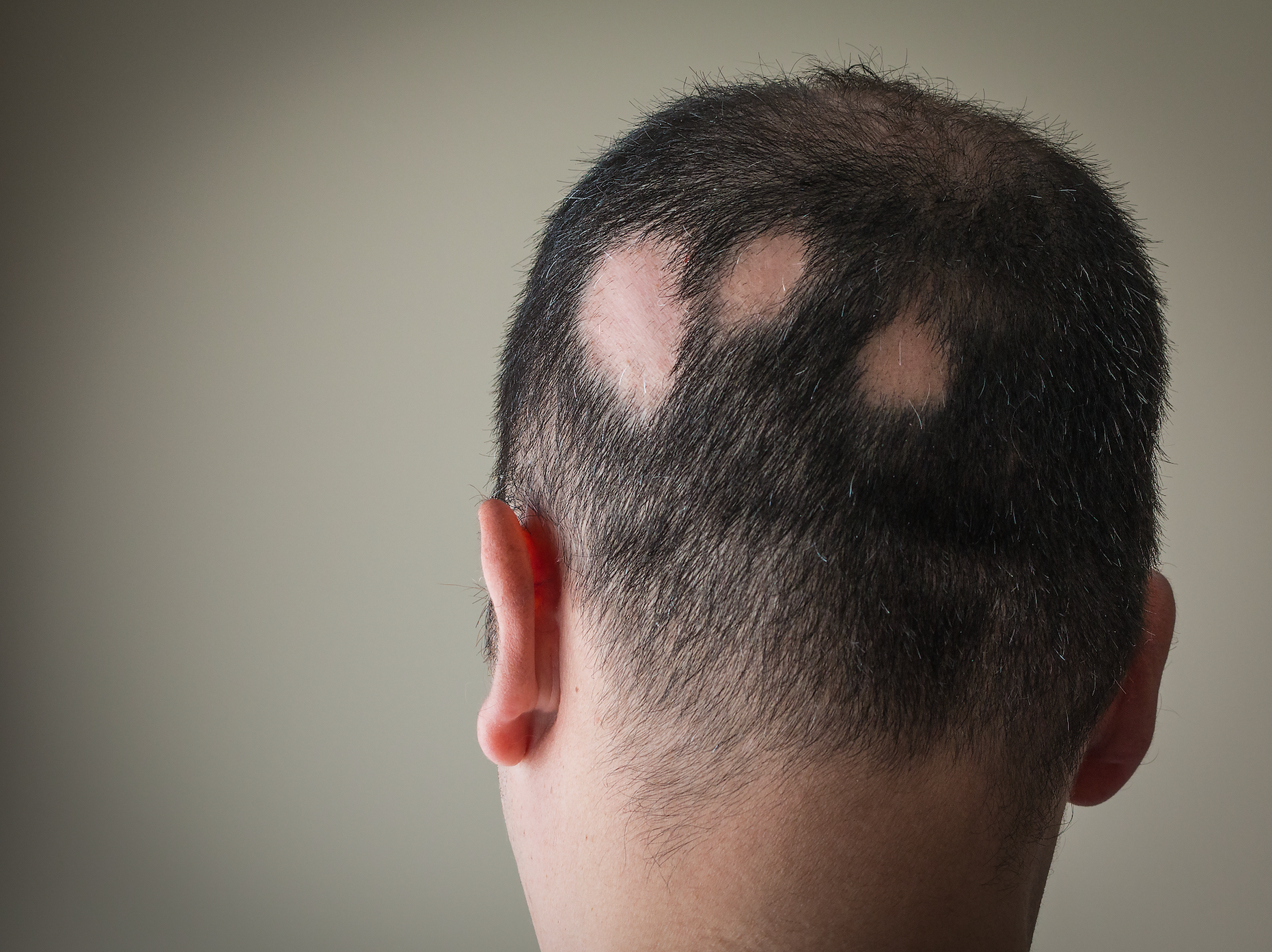
Espy traced much of HS-related stigma back to narrow, Eurocentric beauty standards that expect skin to be smooth and blemish-free. HS causes deep scarring, discoloration, tunneling wounds and, at times, drainage with a distinct odor, and Espy said where those symptoms appear on the body carries its own layer of stigma. Because HS commonly affects areas like the groin, underarms and buttocks, and can occur anywhere there‘s a hair follicle, including places that aren’t visibly hairy, it’s sometimes mistaken for a sexually transmitted infection. That confusion, Espy said, deepens alienation, shame and disconnection from one’s own body.
What clinicians can do differently
Hsiao said the first step toward reducing stigma in a clinical setting is simple validation, letting patients know they’re finally in the right place after what’s often a long and frustrating diagnostic journey marked by repeated urgent care visits, misdiagnoses, and cycles of incision, drainage and antibiotics. She said clinicians should be explicit that HS is not the patient’s fault. Many patients have been told that losing weight or quitting smoking would resolve their HS, a claim Hsiao called flatly untrue. She said she has patients who are underweight or have never smoked who still have severe HS, and that HS can affect people of any body size or background.
Hsiao encouraged patients to ask a potential provider directly whether they’re familiar with HS and comfortable treating it, since HS is common enough that any dermatologist should be. She also pointed to the HS Foundation’s clinic finder as a resource for locating vetted specialists.
Diagnosed at 13, treated by a specialist at nearly 30
Lee was diagnosed with HS at 13 in the early 2000s, before social media or meaningful patient communities existed. Diagnosis alone didn’t mean she received adequate care; she didn’t see a dermatologist who specialized in HS until 2020. During the years in between, HS derailed her education. She said she withdrew from Hampton University, a period she still associates with feelings of failure, before eventually re-enrolling and completing her degree. She described learning to advocate for herself, in doctor’s appointments, at work and in her own understanding of who she was outside of her diagnosis, as a turning point.
Espy described a parallel journey. Early on, she said she didn’t know how to advocate for herself and often dissociated from her body as a coping mechanism, something she said still affects her today. She credits a physician who treated her as a collaborator in her own diagnosis and treatment, genuinely asking what she wanted, with teaching her what advocacy could look like. Over time, that grew into founding AHSID, aiming to create systemic change beyond individual awareness.
Community as a bridge, even before treatment works
Espy shared a story about a woman who attended one of AHSID’s summits alongside her husband, initially withdrawn and reluctant to engage. After participating in a self-care and confidence-building “makeover” experience at the event, Espy said the same woman became visibly transformed, present, expressive and willing to take up space. Espy said the moment illustrated something she’s observed repeatedly: community can meaningfully improve a person’s quality of life even while their treatment journey is still unresolved.
Lee, who is also an artist, said storytelling and editing gave her a way to take control of her own narrative. Asked to describe HS in one word, she chose “joy,” distinguishing it from happiness. Joy, she said, is what remains constant even during hard moments, “what allows you to still crack a smile when you are grieving.” Her message to others living with HS: “You may have HS, but HS does not have you.”
What support looks like for loved ones
Hsiao noted that treating HS often means supporting an entire family system, not just the patient, especially when adolescents bring parents into appointments. She pointed to dedicated support resources for caregivers and teens through organizations like Hope for HS.
Lee described the specific feeling of walking into her first HS community summit and immediately feeling like she didn’t have to explain or adjust her emotions to fit the room, a sense of relief she compared to finally being able to “take the mask off.”
Where to start, if you want to help
Asked what someone unfamiliar with HS should do if they want to support the community, Espy laid out three steps: Get educated through vetted organizations (she named AHSID, Hope for HS, the HS Foundation and HS Connect), become an active advocate once informed, sharing resources with friends or family members who may be affected, and get involved directly through volunteering or attending events. She emphasized that supporting the community doesn’t require deep expertise, just a baseline understanding and a willingness to point people toward help.
The one thing to remember
Asked what she’d want someone to take away if they knew nothing about HS before this conversation, Hsiao offered two points: HS is common, meaning most people likely know someone living with it, even if they haven’t disclosed it. And HS affects far more than the skin; treating the whole patient means acknowledging its impact on every part of daily life. For clinicians, she urged heightened awareness of red flags like recurrent boil-like lesions or abscesses, so patients can move out of repeated urgent-care cycles and into an actual diagnosis and treatment plan sooner. She closed with a message of hope: No single treatment works for everyone, but there are options, and effective care may take some trial and adjustment to find.