

Health Resources Hub / Cancer / Cancer Screenings and Prevention
A Fibroid Surgery Led to a Colorectal Cancer Diagnosis at 45
Patient advocate Amber discovered her Stage 3C colorectal cancer at 45 only after unrelated bleeding following a fibroid surgery led her to a colonoscopy.
Advertisement
Advertisement
By
Lana Pine| Published on September 18, 2026
Fact checked by:
Afton Woodward5 min read
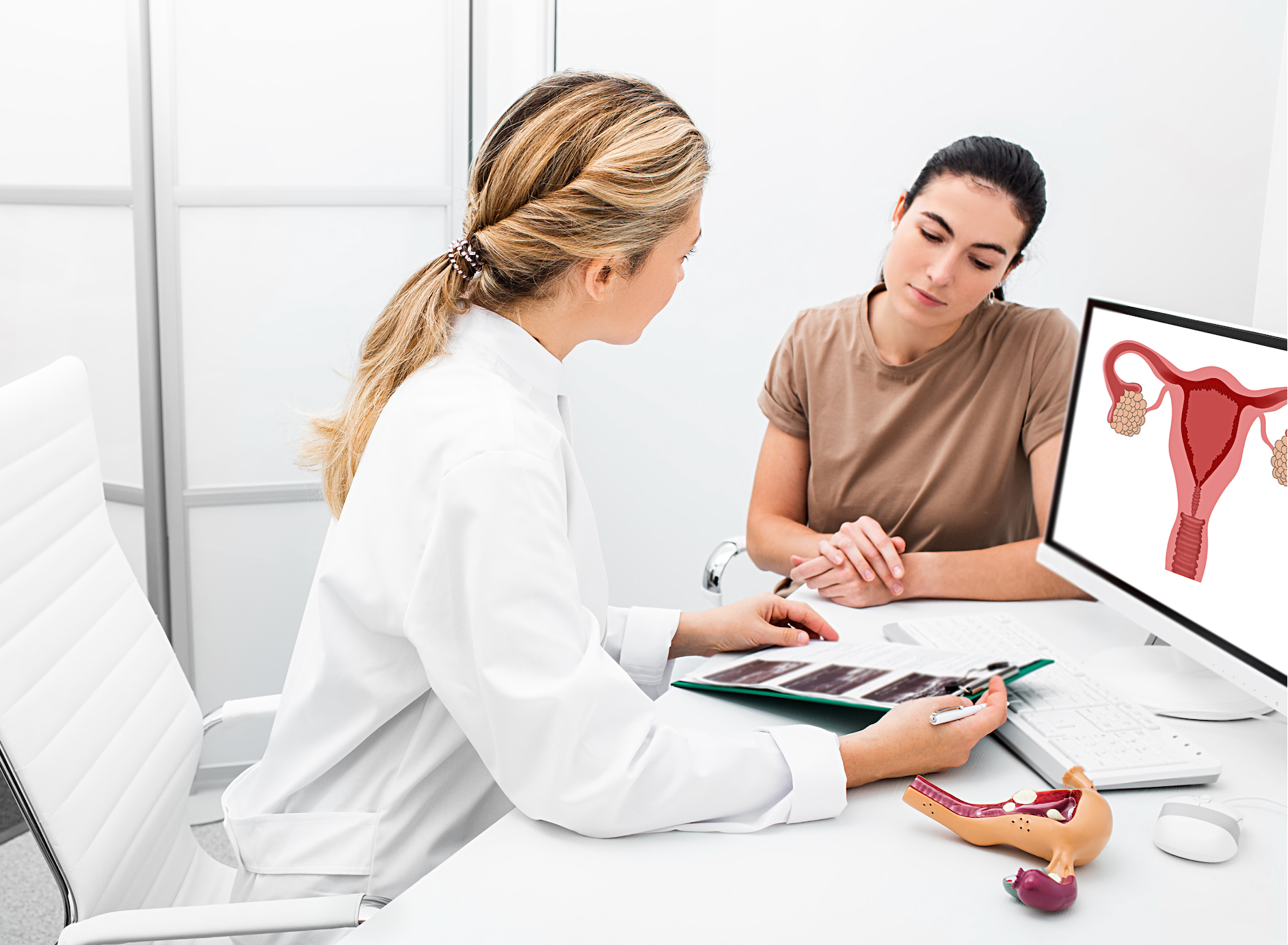
Amber’s path to a colorectal cancer diagnosis began somewhere unexpected. Considering having another child, she opted for a myomectomy to remove fibroids rather than let them stand in the way. During recovery in December 2022, she noticed unexplained bleeding. Her gynecologist found nothing concerning in her uterus and recommended a colonoscopy, advice Amber initially brushed off, given her age. “I’m not even old enough,” she remembers thinking.
By May 2023, with the bleeding persisting, she finally scheduled the procedure herself, as a self-referral rather than through a formal recommendation. She recalls the shift in tone when she woke up from anesthesia: The team had found a tumor significant enough that they woke her specifically to tell her she had cancer, and that City of Hope would be her next step.
A Fast-Moving, Difficult Treatment Course
Amber’s treatment moved quickly. Diagnosed in May 2023, she had port surgery by June and began her first chemotherapy session on July 4. After six rounds and a six-week break, she underwent a colon resection that Thanksgiving, during which doctors removed 40 lymph nodes, 10 of which were positive, confirming her cancer had spread further than initially believed. Additional scans revealed a small metastasis to her lungs. She returned for six more rounds of chemotherapy from January to April 2024 and had the lung spot radiated in July 2025.
Amber later learned that her total of 12 rounds of chemotherapy was not standard, a detail she says reflects how serious her case actually was, something her care team may have shielded her from fully grasping at the time.
Why Age Shouldn’t Be an Excuse
Amber is candid about the stigma surrounding conversations about bowel health, and about her own initial disbelief that colorectal cancer could apply to her. She points out that tumors typically take five to 10 years to develop, meaning she likely had cancer in her early 30s despite being diagnosed at 45. “I don’t look like what I thought colorectal cancer looks like,” she said, a point she believes matters for others who might dismiss their own risk based on appearance, age or lifestyle.
She’s become an outspoken advocate for taking the procedure itself less seriously as a barrier. “It’s one of the best naps you’ll ever get,” she said, comparing the inconvenience of prep to something far less bothersome than Los Angeles traffic. Her larger point: The temporary discomfort of screening is nothing compared with a life “catastrophically upended” by a late diagnosis.
Family, Genetics and Moving Forward
Amber’s diagnosis prompted genetic testing, revealing implications for her family. Her 25-year-old son now needs to begin screening at 25 given his elevated risk, and her sisters, ages 47 and 32, also need to be tested. She emphasizes that family conversations about health history, screenings and genetic risk remain far too rare, despite their importance.
Now cancer-free, Amber describes life as fundamentally divided into before and after her diagnosis. She’s more protective of her health, less cavalier about screenings and appointments, and says she approaches life with less panic and more gratitude. Even during chemotherapy, she continued traveling and living fully, immunocompromised or not, because of how acutely she came to understand life’s fragility.
Walk for Hope
Amber has participated in City of Hope’s Walk for Hope, an event that holds deep personal meaning for her. She recalled her first year walking in 2025, when a man still undergoing infusion treatment walked alongside the group, IV pole and all. The moment stayed with her, a reminder of how many people are simultaneously living through what she survived, and why giving back to that community matters so much to her. “City of Hope saved me,” she said, describing her participation as something she does as much for herself as for others still in treatment.
She hopes her story encourages more people, particularly within communities where colorectal cancer rates are rising among younger adults, to treat screening conversations as casually as talk of restaurants or vacations. “It needs to be as regular as us discussing what movie we’re going to see,” she said.