

Health Resources Hub / Women's Health / Polycystic Ovary Syndrome
The Proactive Shift in Millennial and Gen Z Fertility Trends
Katherine VanHise, M.D., explains how millennials and Gen Z are shifting the conversation around fertility by treating egg and embryo freezing as proactive health care rather than a last resort.
Advertisement
Advertisement
By
Lana Pine| Published on June 10, 2026
Fact checked by:
Afton Woodward9 min read
A major cultural and clinical shift is underway as millennials and Gen Z redefine the landscape of reproductive health. Rather than viewing fertility preservation as a reactive last resort for later in life, younger generations are increasingly embracing “social freezing” as a core pillar of proactive, preventive health care. Now, patients in their late 20s and early 30s are entering clinics to gain autonomy over their futures.
Katherine VanHise, M.D., a reproductive endocrinologist with HRC Fertility, notes that this proactive approach empowers individuals to make family-building decisions from a position of choice rather than geographic or chronological urgency.
From a clinical perspective, how does “social freezing” empower patients, and how has the conversation shifted in your offices over recent years?
Katherine VanHise, M.D.: The conversation around fertility preservation has changed dramatically over the past decade. Many patients no longer view egg freezing as a last resort; instead, they see it as a proactive way to preserve reproductive options for the future.
What I find most empowering is that fertility preservation allows patients to make decisions from a position of choice rather than urgency. Whether someone is focused on career goals, education, travel, financial stability, finding the right partner or simply is not ready for parenthood, egg or embryo freezing can help reduce some of the pressure associated with the biological clock.
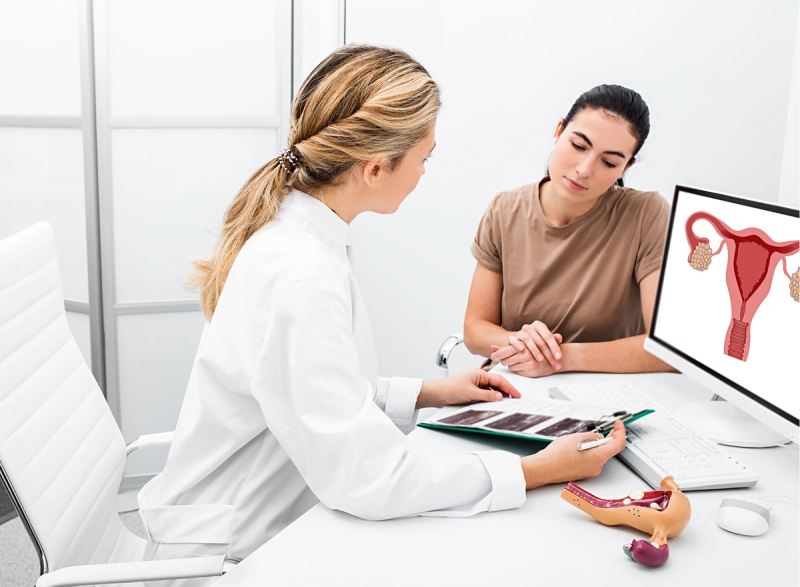
In my practice, patients are also becoming more informed. Many are seeking consultations in their late 20s or early 30s specifically to understand their fertility potential and learn about future options before a problem exists. One of my favorite parts of being a reproductive endocrinologist is teaching patients about their menstrual cycle and helping them understand how their reproductive system works. That knowledge can be incredibly empowering. Understanding your reproductive health early allows you to make informed decisions and gives you more control over your future family-building options.
While younger patients are increasingly interested in freezing their eggs or embryos, what is the ideal age window to maximize the quality and quantity of the retrieved eggs for future success?
KVH: The best age to freeze eggs is often before you need them! From a biological perspective, younger eggs generally have the highest reproductive potential. While there is no perfect age for everyone, the late 20s through early 30s is often considered an ideal window for fertility preservation because egg quality and quantity are typically at their peak.
That does not mean patients should panic if they are older. Many women successfully freeze eggs in their late 30s and early 40s. The most important message is that outcomes are generally better the earlier the process is completed.
Even for patients who are not ready to pursue egg freezing, I encourage them to consider a fertility consultation. A discussion about age-related fertility decline, family-building goals and reproductive health can be valuable regardless of whether they ultimately choose fertility preservation. Knowledge itself can be empowering.
For young individuals who are currently in a committed relationship but delaying parenthood, what are the medical and logistical pros and cons of freezing embryos versus freezing unfertilized eggs?
KVH: Both are excellent options, but there are important medical, financial and personal considerations that can make one approach a better fit for a particular patient.
Embryo freezing means that the eggs are fertilized before freezing them, which provides additional information. Because an embryo has already progressed through important developmental milestones in the lab, it can offer greater insight into future reproductive potential. However, embryos are created with a specific sperm source, which can introduce legal, ethical and emotional complexities if a relationship with said sperm source changes over time. Embryo freezing involves additional laboratory procedures, and therefore, there are typically additional costs compared with egg freezing.
Egg freezing offers greater reproductive autonomy because the eggs remain unfertilized and can later be used with a future partner or donor sperm. This flexibility is one reason many young patients choose egg freezing, even when they are currently in a stable relationship.
From a success-rate perspective, it is important to remember that not every egg ultimately becomes an embryo. There is natural attrition at each step of the IVF process, including fertilization, embryo development, implantation and pregnancy. Because embryos have already progressed through some of these stages, they generally provide more information about reproductive potential than frozen eggs alone. That said, modern egg-freezing technology has improved dramatically over the past decade, and egg freezing has become a highly effective option for fertility preservation.
One of the most important parts of the consultation process is helping patients understand these trade-offs so they can choose the option that feels right for them.
The idea of daily hormone injections and an egg retrieval procedure can feel incredibly daunting to a young patient. How do you prepare patients for the physical and emotional reality of a preservation cycle?
KVH: One of the most important parts of my job is helping patients understand what to realistically expect.
Many patients are surprised to learn that the stimulation process involving hormone injections lasts only about 10 to 12 days. The injections are administered with very small needles (like a Botox needle), and many patients become comfortable with them after the first few days. Additionally, at HRC Fertility, we offer needle-free IVF/egg freezing, which involves administering your medication through a subcutaneous catheter, similar to an insulin pump.
During treatment, my patients typically attend monitoring visits every two to three days so we can safely adjust medications and track follicle growth. Physically, patients may experience bloating, pelvic pressure and temporary fatigue as the ovaries enlarge. Emotionally, the process can feel empowering for some and overwhelming for others. We encourage patients to lean on their support systems and ask questions throughout the process.
The egg retrieval itself is a brief outpatient procedure performed under anesthesia, and most patients return to normal activities within a day or two.
What do millennials and Gen Z need to understand about the survival rates of frozen tissue, and how do you help them view fertility preservation as an excellent insurance policy rather than a 100% guarantee?
KVH: Modern freezing techniques have dramatically improved outcomes. Today, we use a rapid freezing process called vitrification, in which eggs and embryos are flash-frozen in liquid nitrogen. This technology has revolutionized fertility preservation, with excellent survival rates after thawing and decades of reassuring safety data.
That said, I often tell patients that fertility preservation is best viewed as an insurance policy for reproductive options rather than a guarantee of a future baby. The goal is not to promise certainty, but to increase the likelihood of having options later in life. While no fertility treatment can fully stop the effects of aging or guarantee a specific outcome, freezing eggs or embryos at a younger age may preserve reproductive potential and create opportunities that otherwise might not exist in the future.
I also emphasize that fertility preservation and fertility treatment are not the same thing. We hope patients will never need to use their frozen eggs or embryos. However, for many individuals, having those eggs or embryos stored can provide tremendous peace of mind and greater flexibility as they navigate their personal and family-building goals.