

Health Resources Hub / Skin Health / Hidradenitis Suppurativa
“I Lost 15 Years of My Life”: A Man’s Journey Living With Hidradenitis Suppurativa
Keven Brown shares how HS affected his body, mental health and relationships, and ultimately reshaped his outlook on life.
Advertisement
Advertisement
By
Lana Pine| Published on February 25, 2026
6 min read
For many people living with hidradenitis suppurativa (HS), the journey to diagnosis is long, painful and isolating. For Keven Brown, that journey began in his mid-20s with painful lesions on his scalp, and it took nearly six years and visits to more than a dozen doctors before someone finally put a name to what he was experiencing.
Since then, Keven’s life has been profoundly shaped by HS, physically, emotionally and socially. From losing his independence and undergoing dozens of procedures to rebuilding his confidence and finding effective treatment, his story reflects both the devastating impact of HS and the resilience it takes to live with it.
Today, Keven speaks openly about mental health, medical advocacy and why men, in particular, need to seek care sooner rather than later.
When did you first notice symptoms of HS, and how long did it take to receive a diagnosis?
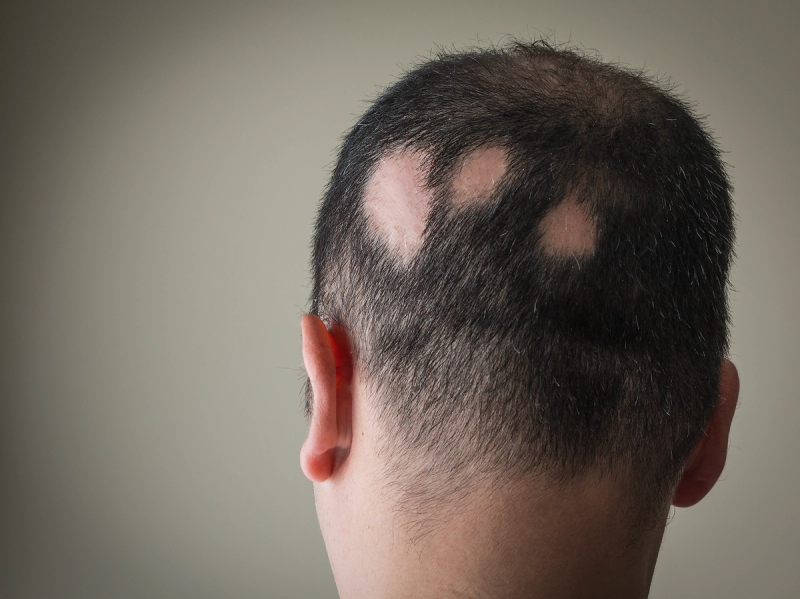
Keven Brown: I first noticed symptoms around 2005 when I was about 25 years old. I would get painful cysts on my scalp. The pain was intense — that’s something universal with HS. When one lesion healed, another would show up a few weeks later. I could barely turn my head. Going to the barber was out of the question because of the pain and the awkward questions.
At the time, I had no idea I had a disease. I saw at least 15 different doctors over about six years. I didn’t even have a primary care physician — I was just bouncing from dermatologist to dermatologist. They would inject the lesions, send me on my way and never really explain what was happening.
One doctor finally said, “I know what this is.” She asked if it had started in my groin yet. I didn’t even realize that was possible. She couldn’t offer much treatment at the time, but just hearing someone acknowledge it was validating. It still took about six years to get a formal diagnosis.
How has HS affected your body image and mental health?
KB: That’s a big question. There were very dark times. I’ve had moments where I understood how someone could feel suicidal. When you’re covered in lesions, bedridden for months, and your parents are brushing your teeth or helping you to the bathroom in your early 30s, your confidence disappears.
I lost everything — my home, my independence. I had to move back in with my parents. But once I started effective treatment, especially infliximab (Remicade) infusions, I slowly got pieces of my life back. I could drive again. I could walk without being out of breath.
Managing the disease in small steps paralleled improvements in my mental health. I still have HS, and flares remind me of that, but I’ve rebuilt confidence over time. Strangely enough, I’m more confident now than I ever was before — because I know how bad things can get, and I survived it.
How has HS impacted your social life and relationships?
KB: Completely. When the disease spread to my groin and became severe, I withdrew. At work, I avoided being close to people because I worried they could smell me. I went from being the “fun guy” to feeling like an outcast.
Dating was incredibly difficult. I lost a significant amount of weight during severe flares — from nearly 290 pounds down to 145. There were nights I cried myself to sleep thinking no one would ever love me.
Even now, HS still affects my social life. I sometimes miss family events or leave early because I’m healing from surgery or sitting is too painful. I try to show up when I can, but there are still limitations.
What has your treatment journey been like?
KB: It’s been extensive. I’ve been on methotrexate, adalimumab (Humira), Remicade, secukinumab (Cosentyx) and multiple pain medications. I’ve had roughly 45 procedures, including major surgeries under anesthesia.
Both of my underarms were surgically removed. I’ve had extensive surgeries in my groin and buttocks. Each surgery took about three months to heal.
One thing people don’t always think about is the mental health component of treatment. Medications for anxiety or depression can be just as important as biologics. When you look down and see the physical changes from surgery, that takes a toll.
What has your experience been like with health care providers?
KB: In the beginning, it was incredibly difficult. I was laughed at. I was dismissed. I’ve had nurses call others into the room to look at me. I’ve been told it was just a “little disorder.”
But once I found specialists who understand HS — particularly at UNC Dermatology — things improved. Now I know where to go. I’ve learned how to advocate for myself. When doctors understand the severity, they take you seriously.
What advice would you give to other men experiencing symptoms?
KB: First, find a specialist who understands HS. That’s more than half the battle.
Second, don’t ignore the mental health side. Men don’t like to talk about that, but every flare weighs on you.
There’s no shame in seeking help. The longer you wait thinking it will go away, the fewer treatment options you may have. Early care matters.
And stress is a real trigger. My disease worsened during major life stressors — breakups, job loss and grief can all impact a person’s HS. There’s definitely a link between stress and flares. Managing stress is part of managing HS.
You have a disease. And there is help.
This interview was edited for clarity.