

Health Resources Hub / Eye Health / Uveitis
From Winter Winds to Screen Strain: How to Fight Dry Eyes Year Round
Dry eye is a common condition caused by insufficient tear production or excessive tear evaporation, often worsened by screens, dry environments and aging.
Advertisement
Advertisement
By
Lana Pine| Published on December 11, 2025
6 min read
Dry eye (also called dry eye disease) is extremely common — especially in winter, among people who spend long hours at screens and among women over 40. Although a minor irritation to many, it can interfere with daily comfort and quality of life. Understanding what causes dry eye and what actually helps is essential.
What Is Dry Eye — and Why Is It So Common?
Your eyes rely on a stable tear film — three layers (oil, water, mucus) — to keep them lubricated, smooth and clear. When that tear film fails, your eyes can become dry, irritated and inflamed.
Dry eye happens for two main reasons:
- Not enough tears. Sometimes the glands simply don’t produce sufficient aqueous fluid. Among the causes: aging, hormonal changes (common in women, especially around menopause), certain medical conditions (e.g., autoimmune disease) and some medications (antihistamines, antidepressants, birth control pills, etc.).
- Tears evaporate too fast. The oil layer — produced by tiny glands along the eyelids — can become clogged or dysfunctional (common in conditions such as meibomian gland dysfunction, allergies, blepharitis), which destabilizes the tear film. Environmental factors also play a role: Dry indoor heat, cold winter air, wind, air conditioning, smoke and even less frequent blinking (for example, during prolonged screen use) all accelerate tear evaporation.
Risk factors make dry eye more likely: being older, being female (especially with hormonal changes), spending long hours staring at screens, contact lens use, living or working in dry or windy environments — or a combination of these.
What Does Dry Eye Feel Like? Recognizing the Symptoms
Common symptoms — often affecting both eyes — include the following:
- A stinging, burning or scratchy sensation
- Grittiness, as if something is in your eye
- Sensitivity to light, or blurred vision
- Stringy mucus around the eyes, or an inconsistent watery or teary discharge
- Eyes that feel dry or tired — especially indoors, after screen time or in cold/windy weather.
If left unmanaged, dry eye can lead to surface inflammation, tiny abrasions or damage to the cornea, increased risk of infection, and even problems with reading or performing routine tasks.
What Actually Helps: Treatments, OTC Options, and Lifestyle Changes
The good news: Many people find relief — often using a combination of simple remedies and supportive lifestyle changes. For mild to moderate cases, these steps often suffice.
Over-the-Counter (OTC) and At-Home Treatments
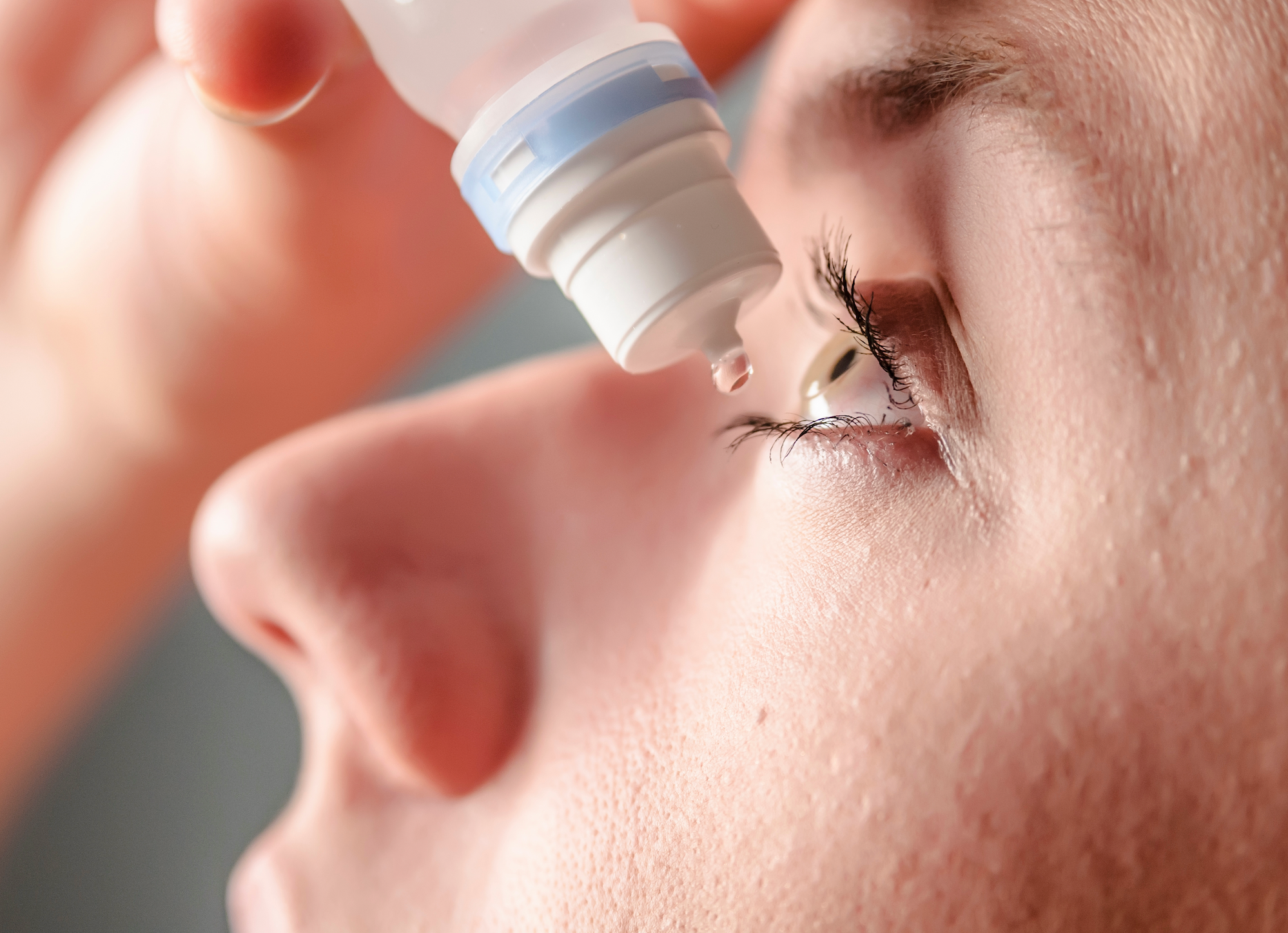
- Artificial tears (eye drops): Regular use of nonprescription lubricating drops is often the first and most effective remedy. Preservative-free formulas are preferred for frequent use.
- Eye ointments: Thicker than drops, ointments can coat the eye for longer moisture. These are often best applied before bed because they may blur vision temporarily.
- Warm compresses: Gently applying a warm (not hot) washcloth over closed eyes for 5 to 10 minutes can help unblock clogged oil glands along the eyelashes and improve tear-film stability.
Lifestyle and Environmental Adjustments
- Use a humidifier: Dry indoor air — especially during winter when heating is on — can sap moisture from your eyes. A humidifier helps keep the air more comfortable.
- Limit screen time / follow the 20‑20‑20 rule: When we stare at screens, we blink less — reducing tear distribution. Experts recommend: Every 20 minutes, look at something 20 feet away for 20 seconds to rest your eyes and prompt more blinking.
- Stay hydrated and eat eye‑healthy foods: Drinking plenty of water supports tear production; a diet rich in omega-3 fatty acids (found in fish, flaxseed and nuts) may help improve the quality of the oily tear layer.
- Protect your eyes outdoors or in windy places: Sunglasses — preferably wraparound — can shield your eyes from wind, dry air, smoke or other environmental irritants that hasten tear evaporation.
- Mind sleep and eyes’ rest: Quality sleep and avoiding exposure to blowing air (like heaters, fans or direct airflow from vents) can make a difference.
When OTC Methods Aren’t Enough — When to See a Specialist
If dry eye symptoms persist despite consistent self-care, or if you experience pain, significant blurred vision, sensitivity to light or worsening discomfort, it’s time to see an eye care professional.
An eye doctor can assess whether you have underlying conditions (e.g., gland dysfunction, tear drainage problems, eyelid issues or autoimmune disease) and recommend more advanced treatments, including the following:
- Prescription eye drops to increase tear production.
- Tear duct punctal plugs — tiny silicone devices to slow tear drainage and keep moisture on the eye’s surface longer.
- Specialized contact lenses (scleral lenses or bandage lenses) that help trap moisture.
- In-office procedures, when oil glands are blocked: thermal pulsation, intense-pulsed light therapy, eyelid treatments, even — in rare cases — surgery.
Putting It All Together: A Balanced Approach
Dry eye is rarely a one‑size‑fits‑all issue. Because there are many possible causes — decreased tear production, evaporative loss, hormonal changes, environmental triggers — the best results often come from combining remedies. For many people, that means using artificial tears or ointments, keeping indoor air humid, protecting the eyes outdoors, moderating screen time, staying hydrated and eating a nourishing diet.
If those steps don’t relieve symptoms — or if dryness becomes chronic, painful or vision‑threatening — seeking care from an eye specialist is crucial. With proper diagnosis and personalized treatment, many people find significant relief and reclaim daily comfort.