Health Resources Hub / Mental Health / ADHD
What Sephora’s Quiet Hours Reveal About the State of the Modern Brain
Two clinical experts explain the neuroscience of sensory overload, why Sephora’s quiet hours signal a cultural reckoning and how to tell whether your coping is expanding your world or shrinking it.
Advertisement
Advertisement
By
Lana Pine| Published on July 23, 2026
Fact checked by:
Afton Woodward14 min read
When Sephora announced the global rollout of its Quiet Hours initiative, lowering music, dimming screens and minimizing strong scents during designated times across all of its U.S. stores, the response was immediate and telling. The program had already been piloted at 32 stores across eight markets. The results were striking: 90% of customers said Quiet Hours made Sephora stores more inclusive and welcoming, and the majority of neurodivergent shoppers said it significantly improved their experience. Sephora became the first beauty retailer to launch sensory-friendly shopping hours on a global scale, continuing a trend that Walmart and Target had already begun. The conversation that followed went far beyond one beauty brand’s policy change. It opened a much larger question: Have we built a world that is too loud for the brains inside it?
Bonnie J. Mitchell, DBH, LPCC, clinical director at The Mental Health and Stabilization Center of Sacramento, has been thinking about this question clinically for years. And what she has found is more uncomfortable than most people expect.
What Is Actually Happening in Your Brain
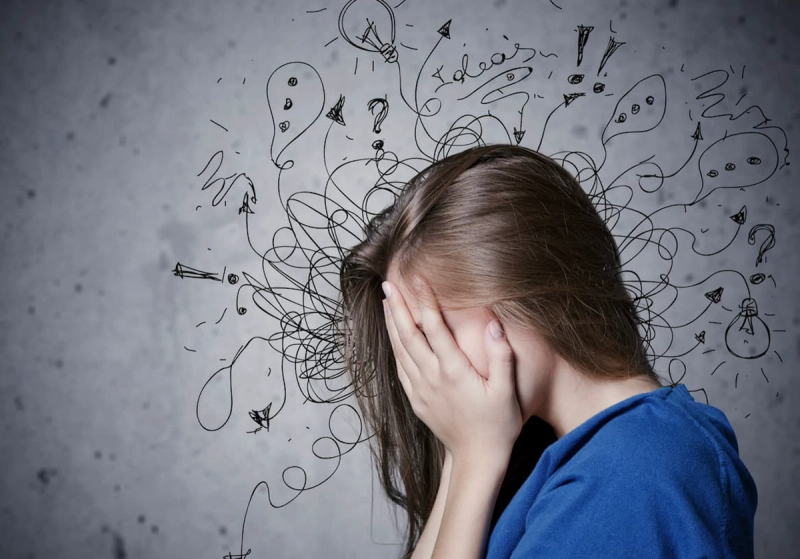
When someone with a highly sensitive or neurodivergent nervous system walks into a bright, loud, scent-heavy retail environment, what they are experiencing is not anxiety in the ordinary sense. It is, as Mitchell describes it, a profound physiological storm.
It begins with a structure called the thalamus, located at the center of the brain, which functions as a sensory router. In a neurotypical brain, the thalamus acts like what Mitchell calls “a strict bouncer, letting only relevant information through to the conscious mind while quietly discarding the rest.” Background noise stays in the background. The hum of fluorescent lights, nearby chatter and the scent of a tester bottle are filtered before they ever reach conscious awareness.
In a neurodivergent brain, that filtering process breaks down. “The thalamus’s gate is essentially stuck open,” Mitchell explains. “Instead of background noise staying in the background, every single stimulus is passed to the cortex at maximum volume. The hum of the AC, the visual glare and a sales associate’s voice all demand conscious attention simultaneously.”
The brain’s threat detection center, the amygdala, responds to that flood of unfiltered data the way it would respond to any threat: by sounding the alarm. “The amygdala cannot distinguish between the danger of a nearby predator and the danger of 50 competing sensory inputs,” Mitchell says. “It interprets this chaotic flood of data as a threat to survival.” The result is a cascade of adrenaline and cortisol, the body’s emergency stress response, triggered not by danger but by a store.
The prefrontal cortex (PFC), responsible for decision-making, emotional regulation and focus, is then forced to compensate. Instead of functioning normally, it must manually filter out everything the thalamus failed to block. That work is exhausting. “Within 15 to 20 minutes, the PFC becomes entirely depleted,” Mitchell explains. “This is why sensory overload leads to brain fog, irritability and an inability to make simple decisions, like choosing between two shades of lip gloss.”
That last detail is not just a vivid example. It is a clinical description of what millions of people experience in everyday environments without ever understanding why.
The Ramp versus the Crutch
One of the most important questions Sephora’s quiet hours raises is not whether they help but whether they might, for some people, make things worse. Mitchell is direct: Yes, the risk is real, and whether sensory-friendly spaces function as a helpful stepping stone or a psychological crutch depends entirely on the clinical profile of the individual.
For people whose primary struggle is anxiety, panic disorder or agoraphobia, the nervous system is reacting to a perceived threat rather than a structural processing difference. The gold standard treatment is Exposure and Response Prevention, which involves deliberately entering uncomfortable environments and remaining there until the brain learns it is not actually in danger. For these individuals, consistently retreating to quiet hours could reinforce the belief that a busy store is dangerous, deepening avoidance rather than reducing it.
For people with autism, attention-deficit/hyperactivity disorder (ADHD) or sensory processing sensitivity, the dynamic is fundamentally different. The underlying issue, Mitchell explains, is not a false threat belief but a structural, physiological limitation in how the brain filters sensory input. “In clinical terms, everyone has a ‘window of tolerance,’” she says. “This is a state of arousal where our nervous system can function, process information and self-regulate.” For neurodivergent individuals whose brains structurally cannot filter environmental noise, quiet hours are not avoidance. They are access.
That distinction is especially important for the many people who carry undiagnosed ADHD or autism into adulthood without ever understanding why certain environments feel genuinely unbearable. Nerissa Bauer, M.D., Ph.D., a behavioral pediatrician and Qbtech adviser, notes that the stress of living with an undiagnosed neurodevelopmental condition compounds over time in ways that make sensory environments even harder to navigate. “The stress of living with undiagnosed ADHD can lead to anxiety and depressive symptoms and feeling inadequate or getting burned out,” she explains. And crucially, the outward presentation of these patients often does not reflect what is happening internally. “Masking of symptoms can lead to negative screeners and thus delay diagnosis,” Bauer adds, meaning many people who struggle most in overstimulating environments are the least likely to have received any clinical explanation for why.
“Quiet shopping hours are a ramp, not a crutch,” Mitchell says. “For a neurodivergent person whose brain structurally cannot filter the noise, the ramp allows them to participate in society. For an anxious person, the ramp offers a manageable way to practice exposure without being completely flooded.”
What Sephora Is Actually Acknowledging
The cultural significance of a major retailer adjusting its core operations around nervous system regulation is not lost on Mitchell. For decades, she notes, public spaces have been deliberately engineered around hyperstimulation, highly saturated visual displays, continuous music and distinct scent profiles, all designed to grab and hold attention.
“The corporate adoption of quiet hours is a quiet admission that our everyday baseline environment has reached a point of chronic sensory saturation,” she says. “It is no longer just clinical populations struggling; the average human brain is experiencing sensory pollution.”
Her cultural observation cuts deeper still. “A decade ago, a shopper feeling panicked in a bright store would likely blame themselves,” she notes. “Today, there is a collective understanding that a retail space can genuinely dysregulate a person.” That shift, from internalizing the stress to advocating for structural change in the spaces we inhabit, represents something meaningful about where we are as a culture.
She also makes a pointed observation about economics. When a multibillion-dollar brand adjusts its core retail operations, it signals that neurodivergent individuals and people with sensory sensitivities represent a massive, economically viable consumer group willing to vote with their wallets. The business case and the mental health case have converged.
What she calls the new luxury is silence. “In a hyperconnected, notification-driven, algorithmic world, peace and quiet have become premium commodities,” Mitchell says. “The companies that learn how to give our prefrontal cortexes a rest are the ones that will win our loyalty in the future.” Ultimately, she adds, these initiatives signal that we are beginning to value nervous system regulation as a fundamental human right in public life, rather than a luxury reserved for the privacy of our homes.
You Do Not Need a Diagnosis to Be Affected
One of the most important points Mitchell makes is one that most coverage of sensory-friendly retail tends to miss. You do not need a clinical diagnosis to be profoundly affected by sensory overload. “A massive portion of the general population is walking around in a state of chronic, low-grade overstimulation without ever realizing it,” she says.
Modern interiors, cluttered workspaces and heavily fragranced environments demand constant processing. The brain is wired to scan complex environments to ensure they are safe, and the more visual clutter and synthetic stimulation we surround ourselves with, the harder it has to work. Because we rarely label our state as sensory overload, we attribute the toll to other things: a bad day, poor sleep, general irritability.
This is where the diagnostic gap becomes especially meaningful. Bauer points out that for many people, the absence of a formal diagnosis does not mean the absence of a neurodevelopmental difference. “ADHD symptoms can wax and wane and depend on the environment, what you are doing, and whether you have interest and motivation to proceed,” she explains. A person who functions well in a quiet home office but falls apart in a crowded, noisy store may not be anxious or dramatic. They may simply have a nervous system that was never built to handle that level of sensory input, and never received a framework for understanding why.
Mitchell offers two telling examples of what chronic overstimulation looks like in daily life. The first is what she calls the “What did I come in here for?” syndrome, the experience of getting up to do something and immediately forgetting what it was. “This happens when your working memory is too crowded with environmental background noise to hold onto a short-term goal,” she explains. The second is finding yourself snapping at minor inconveniences, a wrapper that will not open, a slow computer. “When the brain is at sensory capacity, any additional demand is treated as an existential threat.”
Sensory-friendly spaces, she argues, are not just for clinical populations. They are a direct response to a cultural crisis. “We have built a world that is louder than our brains were ever designed to handle,” she says.
When Accommodation Becomes Avoidance
For anyone consistently finding crowded or noisy public spaces overwhelming, with or without a diagnosis, Mitchell draws a clear and important line between healthy accommodation and clinical avoidance. It is a line, she cautions, that almost everyone struggling with sensory overload crosses at some point.
The difference, she says, does not lie in the tools themselves. Wearing noise-canceling headphones, choosing quieter hours, using grocery delivery: These behaviors can belong to either category. “The core difference does not lie in the actions themselves,” she explains. “The difference lies in how these choices affect your life, your mental freedom and your emotional window of tolerance.”
The most significant clinical indicator is whether accommodations are expanding your capacity to live your life or slowly shrinking the world you are willing to participate in. A reasonable accommodation is a bridge. You wear earplugs so you can attend a friend’s birthday dinner at a loud restaurant. You use delivery so you have the cognitive energy to visit a museum on the weekend. The accommodation keeps you connected to your values and your relationships.
Clinical avoidance, by contrast, is a shield that cuts you off. “You refuse the birthday dinner entirely because the restaurant might be loud,” Mitchell says. “You slowly stop visiting friends, going to the office or running errands, eventually confining your life to a highly curated, hypercontrolled bubble. Your world becomes smaller and smaller because your primary goal is the absence of discomfort.”
If that pattern sounds familiar, she recommends seeking support from a therapist trained in cognitive behavioral therapy, acceptance and commitment therapy or sensory-integrative occupational therapy. The goal is not to eliminate sensitivity. It is to ensure that sensitivity does not quietly eliminate your life.
Because the world is loud. And your brain deserves better than just surviving it.